

Customer Journey Mapping for Service Businesses
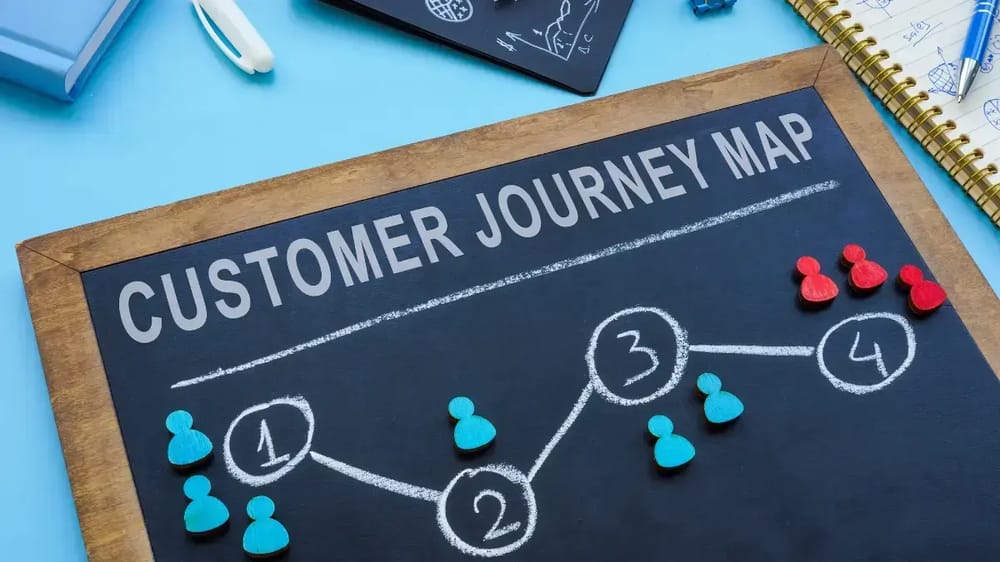
Quick answer: Most service businesses lose potential clients in the gap between "I'm interested" and "I'm ready to buy." To find and fix it, map your customer journey as four simple moments, Discovery, Check Out, Think About It, and Take Action, then look for the spot where there's no bridge to the next stage. Usually it's a missing lead magnet, a missing follow-up email, or an ad that dumps people on a generic homepage. Fix one gap and your conversion rate moves without spending a dollar more on traffic.
If you're getting traffic but not clients, this is almost always where the breakdown is. Let's walk through it.
A couple of weeks ago, a business owner messaged me frustrated about his ad spend. He was running Facebook ads to his website, getting solid traffic, and his cost per click was reasonable. But almost nobody was converting.
So I asked him to walk me through what happens after someone clicks the ad. He said, "They go to my website."
"Okay, and then what?"
"They look around, hopefully fill out my contact form."
"And if they don't fill it out?"
Long pause. "I guess... nothing?"
That was the problem. He had a great ad bringing people in the door. He had a decent website. But there was nothing connecting those two things. No intentional path from "I just clicked this ad" to "I want to work with this person." People were landing on his homepage, looking around for a few seconds, and leaving.
It wasn't a traffic problem. It wasn't even really a website problem. It was a customer journey problem. There was no bridge between the moment someone discovered him and the moment they were ready to take the next step.
This is more common than you'd think. Deloitte research is widely cited for the finding that customer-centric companies are 60% more profitable than those that aren't. And a big part of being customer-centric is simply understanding what someone goes through between first hearing about you and deciding to buy from you.
Most businesses build a website, run some ads, and hope the middle part works itself out. It doesn't. So let's map it.
Why the Middle of the Journey Is Where the Money Lives
Here's what most business owners build. They build a way to get attention, like ads, social media, or referrals. And they build a place to send people, like a website or landing page. But the space between those two things? That's where most potential clients quietly disappear.
Someone sees your ad. They click. They land on your site. They read a little. They leave. Maybe they meant to come back. Maybe they got distracted. Maybe they weren't quite ready. Either way, they're gone, and you have no way to reconnect with them.
That gap between "I'm interested" and "I'm ready" is the most valuable real estate in your entire marketing setup. And for most small businesses, it's completely empty.
What a Customer Journey Actually Looks Like
Let's keep this simple. Forget the marketing diagrams with ten stages and color-coded arrows. For most service businesses, the customer journey has four basic moments.
Moment 1: They discover you exist. Maybe they saw an ad. Maybe a friend mentioned you. Maybe they found you on Google. At this point they know your name and maybe one thing about what you do. That's it.
Moment 2: They check you out. They visit your website or social media. They're scanning for two things: does this person seem legit, and does this person understand my problem? This usually takes less than 30 seconds.
Moment 3: They think about it. This is the moment most businesses completely ignore. The person is interested but not ready to commit. Maybe they need to talk to their spouse. Maybe they want to compare options. Maybe the timing isn't right this week. This "thinking about it" phase can last days, weeks, or even months.
Moment 4: They take action. They fill out the form. They book the call. They make the purchase. This is the only moment most businesses plan for, but it only happens if the first three moments were handled well.
The biggest drop-off for most service businesses happens between Moment 2 and Moment 3. Someone checks you out, thinks "maybe," and then leaves with no reason to come back. No resource to download. No email list to join. No follow-up. Nothing.
And between Moment 3 and Moment 4, the drop-off happens because most businesses go silent during the thinking phase. The person is still interested, but nobody's there to keep the conversation going.
How to Find Where Your Journey Breaks
Here's something you can do right now that will show you exactly where people are falling off in your process.
Think about your last 10 website visitors who didn't convert. If you have analytics, even better. But even without them, ask yourself these questions:
- Do people know what to do when they land on your site, or are they just browsing with no clear next step?
- When someone's interested but not ready to buy today, do you have any way to stay connected, like a lead magnet, a free resource, or an email list?
- After someone shows initial interest, what do they actually hear from you, a follow-up email, a check-in, or radio silence until they reach out on their own?
- Does your ad or social post send people to a page that matches what they just clicked, or does it drop them on a generic homepage?
For most businesses, the answer to at least one of those is "nothing." And every "nothing" is a gap where potential clients fall through.
How to Build the Bridge Between Each Stage
You don't need a complicated funnel with 47 steps and a dozen automated emails. You need a simple bridge that connects each moment to the next one.
Between discovery and checking you out, make it easy to learn more. Your ad or social post should lead somewhere specific, not just your homepage. A dedicated landing page that matches what someone just clicked performs far better than dropping them on a general website and hoping they find their way.
Between checking you out and thinking about it, give them a reason to stay connected. This is where a lead magnet, a free resource, or even a simple email opt-in does its job. The goal isn't to sell anything yet. It's to make sure they don't just vanish.
Between thinking about it and taking action, stay helpful. A short email sequence that delivers value, answers common questions, and gently reminds them you exist is often the difference between a lost lead and a new client.
That's the whole journey. Discovery leads to checking you out. Checking you out leads to staying connected. Staying connected leads to action. When you lay it out like this, your gaps become obvious.
A few simple bridges that fix the most common gaps:
- Swap your ad's destination from your homepage to a matching landing page
- Add one lead magnet that solves a small, specific problem for your ideal client
- Put an email opt-in somewhere people actually see it, not buried in the footer
- Set up a short 3 to 5 email welcome sequence that nurtures new leads
- Make sure every page answers "what do I do next" with one clear action
The Bottom Line: Stop Hoping the Middle Works Itself Out
The businesses that convert at higher rates usually aren't getting more traffic or spending more on ads. They've just built intentional bridges between each stage of the customer journey so people don't fall through the cracks.
If you do the four-moment exercise today, you'll probably find at least one spot where there's a gap. Maybe you don't capture leads who aren't ready to buy yet. Maybe your follow-up after initial interest is nonexistent. Maybe people land on your homepage from an ad with no idea what to do next.
Any one of those gaps, fixed, could meaningfully change your conversion rate. And the good news is none of them require a complete overhaul. Most can be solved with a simple landing page, a lead magnet, or a short email sequence.
Start with the one gap that feels biggest. Build that one bridge. Then move to the next.
Ready to Map Your Journey? Here Are Three Ways I Can Help
1. Get a Free Website & Funnel Audit
Not sure where people are dropping off in your journey? Let me take a look. I offer free 30-minute audits to coaches, consultants, and local service business owners who want clarity on their digital presence. I'll review what you have, point out where the gaps are, and suggest which bridge to build first.
Book your free audit with Repair My Funnel →
2. Try the Free Funnel Strategy Creator
Mapping your customer journey is a core part of building a funnel that actually converts. Our free Funnel Strategy Creator walks you through the stages, helps you spot what's missing, and hands you a personalized funnel blueprint with page templates and email sequences. It takes about two minutes and gives you a clear starting point.
Get your free funnel strategy →
3. Get Weekly Actionable Marketing Tips
Want more practical advice like this in your inbox? Every Monday I send out the Spark & Scale newsletter with bite-sized, actionable marketing tactics service businesses can use right away. This post started as a Spark & Scale edition, part of an ongoing series on planning before you build. Recent editions covered the five questions to answer before building anything online and how to define your ideal customer so your message actually lands.
Join Spark and Scale (Free) →
What's Next in This Series
You now know who you're talking to and what their journey looks like. But here's the catch: even with the right audience and a mapped-out journey, people still hesitate if your pages don't build the right beliefs in the right order.
Up next: What Someone Needs to Believe Before They'll Ever Say "Yes." We're getting into the psychology of what makes someone feel confident enough to take action, and how to structure every page around it. It's the piece that turns a mapped journey into actual booked clients.
Additional Resources
For further assistance and more in-depth guides, check out these resources:
If you need personalized help, contact our support team at support@repairmyfunnel.com.
Additional FAQs
What is a customer journey, in plain English?
It's the path someone takes from first hearing about you to becoming a paying client. For most service businesses it breaks into four moments: discovering you exist, checking you out, thinking about it, and taking action. You don't need a fancy diagram. You just need to know what happens, or doesn't happen, at each of those four moments so you can spot where people are dropping off.
Where do most service businesses lose people?
Usually between "checking you out" and "thinking about it." Someone visits your site, decides "maybe," and then leaves with no reason to come back, no resource to grab, no list to join, no follow-up. The second most common gap is going silent while someone is still deciding. Both are fixable with a simple lead capture and a short follow-up sequence.
Do I need a complicated funnel to fix this?
No. The instinct to build a giant automated funnel is exactly what keeps most people from doing anything at all. You need one bridge between each stage, not 47 steps. A matching landing page, one good lead magnet, and a short welcome email sequence will close most of the gaps for a typical service business. Start simple and add only when you see a reason to.
What's a lead magnet, and why does it matter here?
A lead magnet is a free, useful resource, a checklist, guide, or quick assessment, that someone gets in exchange for their email. It matters because it's the bridge that keeps interested-but-not-ready people connected to you instead of disappearing. Without one, anyone who isn't ready to buy today is gone for good. With one, you can keep the conversation going until the timing's right.
How do I know which gap to fix first?
Do the four-box exercise: write Discovery, Check Out, Think About It, and Take Action across a page, then note what currently happens under each. The first box that's empty or where your answer is "nothing" is your biggest gap. Fix that one first, since it's where you're losing the most people, then work down the list. You don't have to fix everything at once.

Howdy, I'm Tyson
Owner Of Repair My Funnel
Growing your service business online shouldn't feel overwhelming or confusing. That's exactly why I created Repair My Funnel.
I've spent years mastering ClickFunnels and digital marketing systems, but more importantly, I've learned how to translate that expertise into simple, clear guidance for business owners who just want their online presence to work. My mission is helping established service businesses build professional websites, effective funnels, and reliable systems that attract and convert more clients without the tech stress.
Here on the blog, you'll discover practical strategies from our proven 5-pillar framework covering everything from building a solid website foundation to creating content that drives organic traffic. Whether you're a coach, contractor, wellness professional, or local service provider, you'll find step-by-step guides and real-world tactics designed specifically for service businesses like yours.
Ready to get actionable insights delivered weekly? Join the Spark & Scale Newsletter where I share my best strategies to help you attract more clients, streamline your systems, and grow your business with confidence.
Featured Articles

Stuck building your whole website at once? Launch a 3-page minimum viable funnel first (homepage, offer, action), start getting leads, then add the rest.

Stop guessing if your site works. Track three simple numbers (traffic, conversion rate, cost per result) to diagnose exactly what to fix and what to leave alone.

Got the right content but no conversions? Learn the 4 beliefs to build, in order, so your landing page turns hesitation into yes without writing anything new.
Getting traffic but not clients? Learn how to map your customer journey in four simple steps and find the exact gap where service businesses lose the most leads.

Latest Posts
Monday, June 29, 2026
RepairMyFunnel.com, a DT Designs LLC Product ■ All Rights Reserved © 2024-2025 ■ 1212 5th Ave N, Apt 2, Seattle, WA 98109
Privacy Policy - Terms - Disclaimer - Contact